

Your cart is empty
Tax included and shipping calculated at checkout
Drawer menu
Tax included and shipping calculated at checkout
Art & Craft | Venice
The Fire, the Breath,There is a heat you never forget. Not the summer sun, not the warmth of a fireplace. It is the heat of the Murano furnace — white, absolute, alive. Inside a glassworks on this small Venetian island, the world slows and takes shape in the hands of those who have learned their craft from fathers, grandfathers, and great-grandfathers before them.
Murano glass is not decoration. It is a statement; a fragment of fire, labour, and centuries-old mastery that changes every space it enters. Made for few. Loved by many. Irreplaceable by any.
Murano, Venice | Est. 1291

Art & Craft — Venice
Murano is not simply an island. It is a rite passed down through centuries, guarded by hands that know heat the way others know their own voice.
There is a heat you never forget.
Not the summer sun, not the warmth of a fireplace. It is the heat of the furnace; white, absolute, capable of bending both matter and time. Those who have crossed the threshold of a Murano glassworks know it: inside, the world slows, thickens, and takes the shape of whatever one desires to create.
Murano glass is not simply an object. It is a statement. Every piece that enters a space; a private home, a gallery, a hotel; carries with it centuries of knowledge, a silent signature of human craftsmanship at its highest. No machine can replicate it. No algorithm can anticipate its form as the master blows, rotates, and shapes. It is art born in a single instant, and in that instant it becomes eternal.
"You do not become a master glassblower by choice. You are born into a family that has blown glass for generations, and the fire enters the blood before it ever reaches the mind."
The master glassblowing families of Murano are not easily counted. They pass their craft down the way one passes a surname; with pride, with rigour, with the awareness that every mistake is visible, that every imperfection speaks. A master is not formed in an academy: he is formed beside the fire, watching his father, his grandfather, his great-grandfather. He is formed in the silence of one who observes, and in the courage of one who, one day, picks up the blowpipe for the very first time.
Not everyone, however, can become a master. Growing up on the island, breathing the smell of molten glass from childhood, is not enough. Something rarer is required; an uncommon combination of physical endurance, aesthetic sensitivity, intuition for the material, and absolute patience. Some try for years and stop before they arrive. Because glass does not forgive haste, and the furnace does not respect those who fail to respect it.
Working molten glass is a physical act in the deepest sense of the word. The furnace reaches 1,400 degrees Celsius. The blowpipe, loaded with incandescent glass, can weigh up to five kilograms; and must be kept in constant rotation, because the glass does not wait: stop turning, and it falls, deforms, is lost. Arms burn. The back learns every impossible posture. Sweat evaporates before it has time to form.
And yet in that extreme environment, something extraordinarily delicate is born. A goblet transparent as water. A vase that captures light and transforms it into colour. A sculpture that seems to breathe. The harshness of the labour and the lightness of the finished result live in the same gesture, in the same breath. It is this contradiction that makes Murano glass unique in the world.
"Creating something truly remarkable demands creativity, yes; but also that silent patience which only fire knows how to teach."
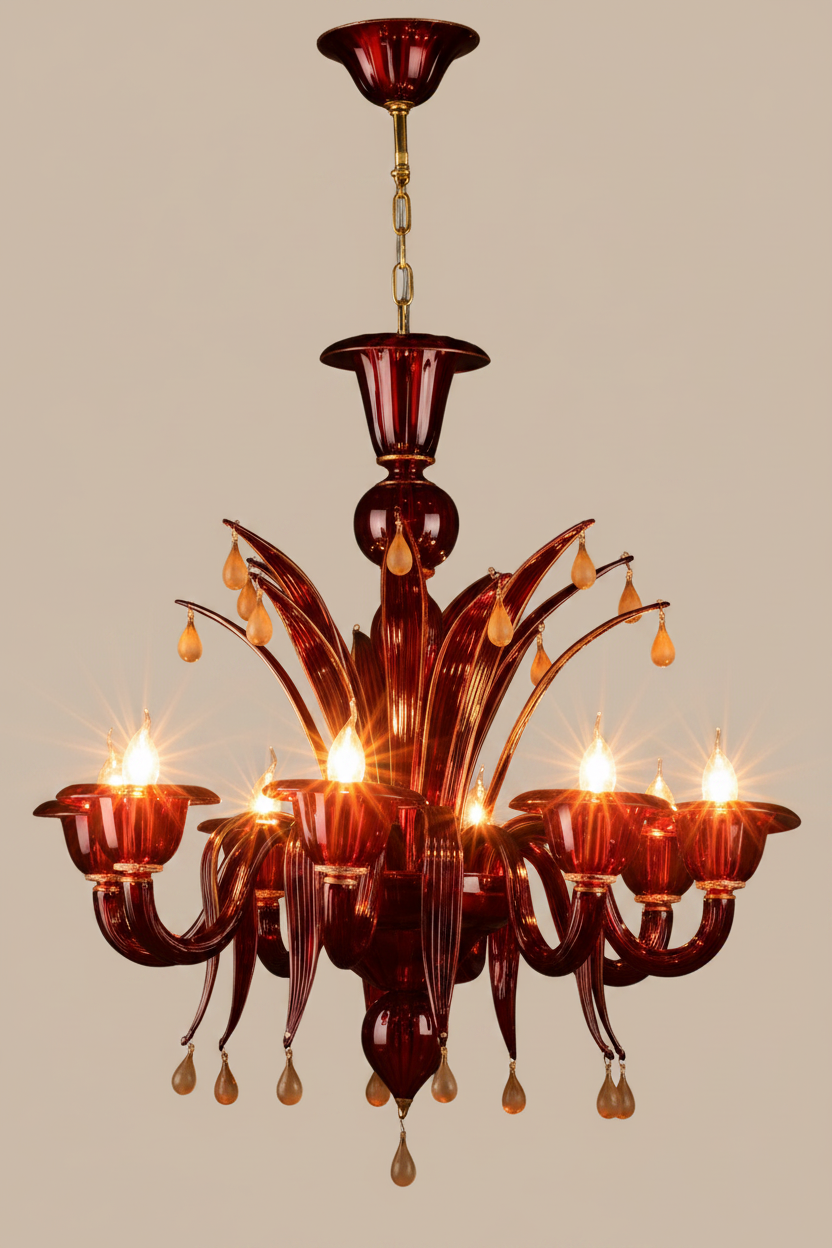
A piece of Murano glass does not decorate a space: it defines it. There is a difference between a furnished room and one that tells a story. A chandelier in blown glass transforms a ceiling into a private constellation. A vase set on a table becomes the gravitational centre of the entire room. A glass sculpture catches the eye, holds it, invites it to return; because each time the light changes, the object changes with it.
This is what separates Murano glass from any industrial alternative: its dialogue with light is alive, unpredictable, unrepeatable. No two pieces are identical. It is this uniqueness that makes the difference; not in the decorative sense of the word, but in the deeper one: the presence of an object that carries with it history, humanity, beauty built by hand.
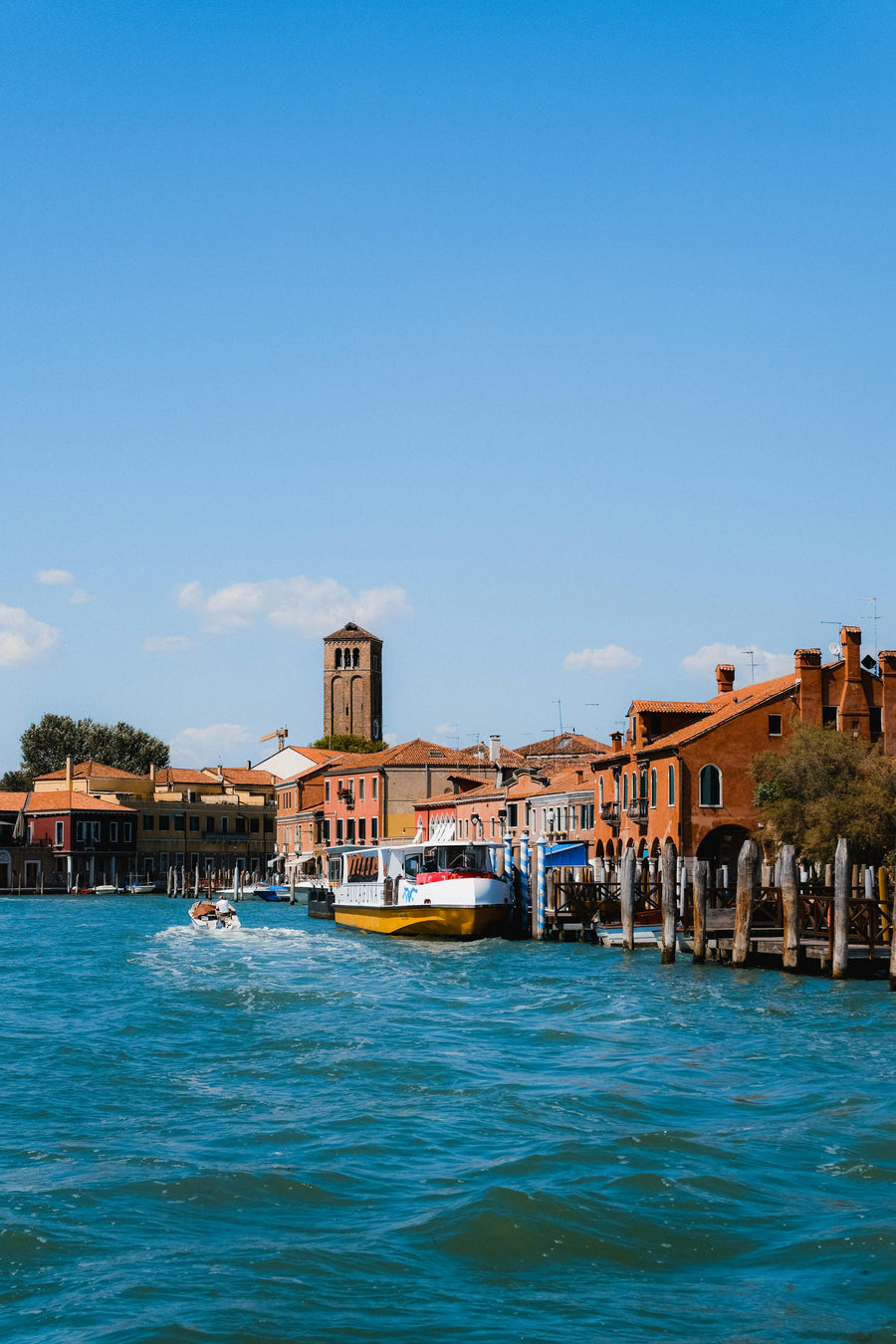
Murano today is a difficult place to call home. It is not Venice with its tourists and its bridges immortalised in millions of photographs. It is a quieter, sterner, truer island. The alleys are narrow, the shops few, the transport irregular. Living there is a choice; almost a vocation. Those who stay do so for something that cannot be measured in comfort: they stay to belong to something ancient, to keep alive a fire that cannot be allowed to go out.
And yet Murano is loved by millions of people around the world. Its glass can be found in the most important museums, in the homes of the most discerning collectors, on the tables of those who have understood that certain objects are not purchases, they are encounters. The island is made for few, inhabited by few, but its talent reaches everyone.
When you bring home a piece of Murano glass, you are not buying a decorative object. You are carrying with you a fragment of that furnace, that labour, that beauty built at the edge of what is bearable. You are bringing Murano into your space, and your space will never be quite the same again.
Every piece is a story. Every story deserves to be displayed.
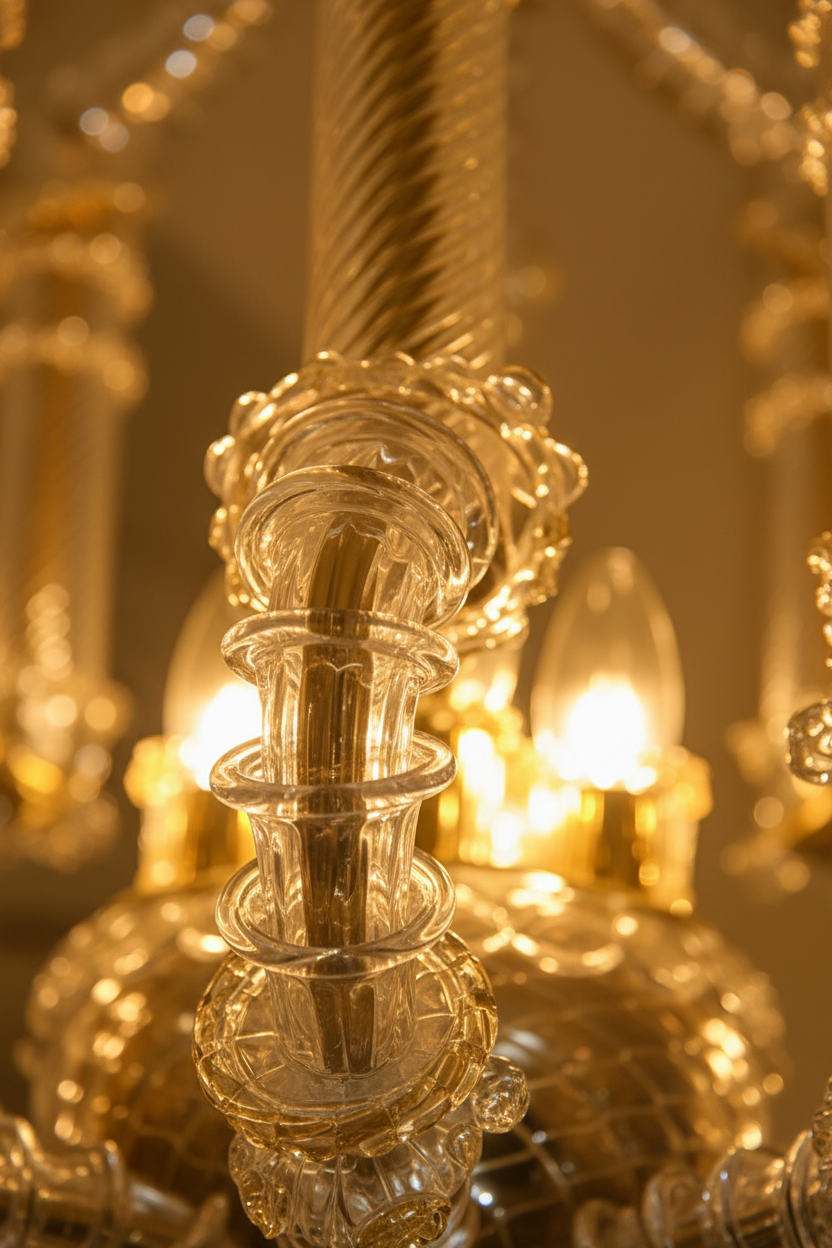
Bespoke design and custom decor: chandeliers, rugs, mirrors and wallpaper created for your project. From concept to finished piece, with Italian artisans.