Why choose a silk rug
You may be wondering what makes silk so special compared to any other fibre. The answer lies in two qualities no synthetic material can replicate: natural luminosity and the fineness of the yarn.
A sheen that changes with the light
Silk rugs reflect light dynamically: the surface shifts in tone depending on the viewing angle and the lighting in the room. This iridescent effect, entirely natural, comes from the prismatic structure of the silk fibre, which breaks light apart and creates ever-changing plays of colour. That is why a fine silk rug looks different in the morning, at sunset and under the artificial light of the evening: a living piece, never quite the same twice. Not bad, right?
Softness and precision of design
The fineness of silk yarn allows for a knot density remarkably higher than Himalayan wool rugs: the most refined rugs in history exceed 1,000 knots per square inch. In essence, the finer the yarn, the more detailed the design can be. Intricate motifs, gradual colour shading, imperceptible tonal transitions: everything that would be impossible with coarser fibres becomes reality with silk. Underfoot, the surface is particularly soft and enveloping, with that silky sensation that turns every step into a sensory experience.
Fine hand-knotted rugs: how they are made
A quality silk rug cannot be improvised. Behind every piece in our collection lies a long, meticulous and entirely artisanal process.
Designed in Italy, handcrafted in India
Each of our rugs starts from a graphic project developed in Italy: concept, colour palette, proportions and composition are defined by our design studio. The design then passes into the hands of specialised artisans in India, who bring it to life knot after knot. To give you a concrete idea: a medium-sized hand-knotted rug requires the work of 3 or 4 artisans for around 12 consecutive weeks. Every single knot is tied by hand on the warp, following the original design with millimetric precision. Little secret: the slight irregularities you may notice when looking closely at a hand-knotted rug are not flaws, but the signature of authentic craftsmanship.
What makes a hand-knotted rug different from a hand-tufted one
The difference is substantial. A hand-knotted rug is built knot by knot on a vertical loom: each knot is independent, the back of the rug mirrors the design and its lifespan is measured in generations. A hand-tufted rug is instead made by punching yarn into a canvas with a handheld tool: quicker to produce, but less durable and less precious. For hand-knotted rugs in silk, the advantage is clear: maximum density, maximum definition of the design and a value that grows over time. If you want to explore this technique further, browse our collection of hand-knotted rugs.
Natural silk, viscose and bamboo silk: the differences
At this point, it is worth clearing up a topic that confuses many: not everything that shines is silk. The market offers fibres with a very similar look (viscose, bamboo silk, banana silk) that to an untrained eye can appear identical to natural silk.
How to recognise real silk
There are a few signals that help you tell a genuine silk rug from an imitation:
- Shifting sheen: real silk changes its reflection with the viewing angle, while artificial fibres have a flatter, more uniform shine
- Fineness of design: natural silk allows details and shadings that thicker fibres cannot reach
- Feel to the touch: warm, soft and dry, never cold or slippery like some viscoses
- Back of the rug: in hand-knotted pieces, the design is crisp and mirrored on the reverse as well
- Structure: silk is woven onto a sturdy wool or cotton foundation that gives the rug its stability
Please note: the similarity between silk and high-quality viscose is such that even experienced collectors must look carefully at tactile quality and luminosity to spot the differences.
Plant-based alternatives: Tencel and bamboo silk
Clearly, not all alternative fibres are imitations to avoid. Quite the opposite: there are plant-based yarns of the highest quality that deliver the luminosity of silk with a more sustainable profile and a more accessible price point. Tencel, for instance, is a plant-based fibre produced through a closed-loop process that recovers water and solvents, combining luxury with environmental responsibility. Bamboo silk transforms a renewable resource into a bright, silky yarn, perfect for contemporary rugs with a luminous effect. If this approach intrigues you, take a look at our collections of viscose and Tencel rugs and bamboo silk rugs.
Designer silk rugs for every room
A silk rug is not just another furnishing: it is the focal point around which the entire room is built. Our designer rugs are created to converse with spaces, not merely to decorate them.
In the living room
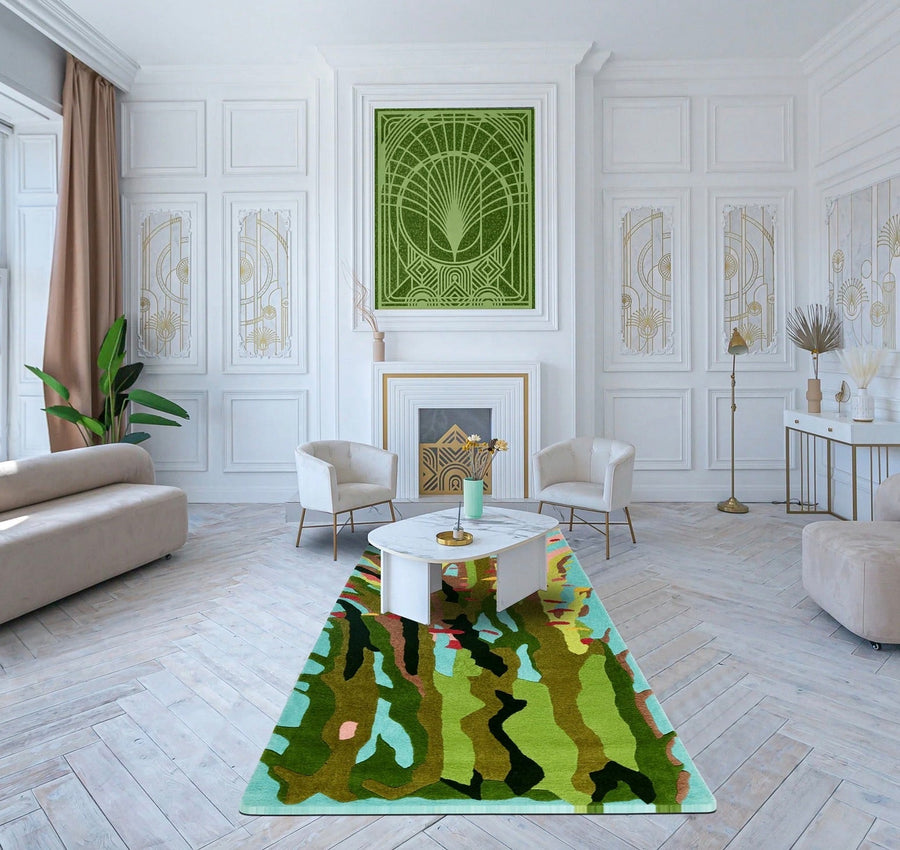
The living area is the ideal setting for a large silk rug. A good method is to play with contrast: unlike modern rugs with their essential geometries, a silk rug in intense colours and an elaborate pattern set against neutral décor immediately becomes the protagonist, like a painting laid across the floor. For open-plan spaces or grand living rooms, also consider our collection of oversized rugs, available in silk and special sizes.
In the bedroom
In the bedroom, silk gives its very best on a sensory level. The softness of the pile and the delicate sheen create an enveloping atmosphere, perfect for the sleeping area. A rug in powdery shades or tone-on-tone gradations accompanies your waking hours with discretion and elegance.
Pairing with lighting and mirrors
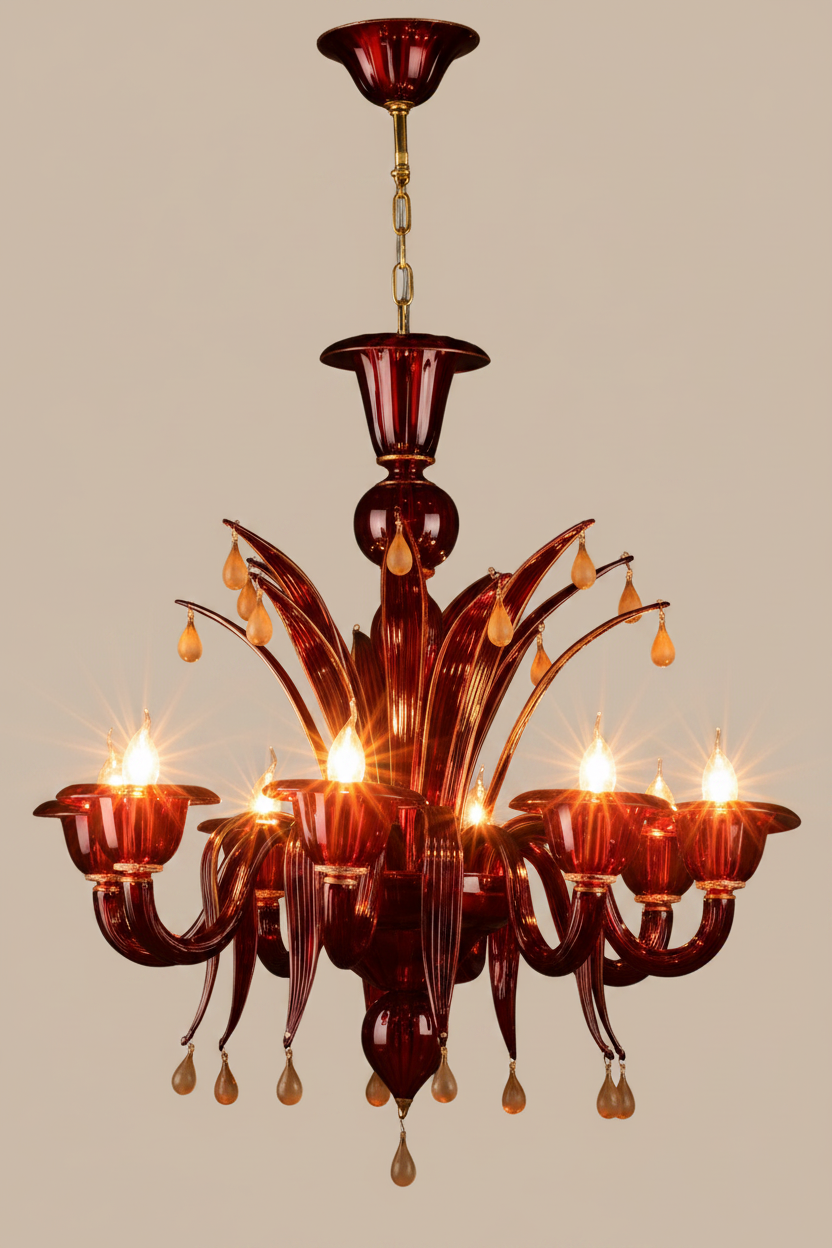
A little interior designer's secret: silk lives on light, so the lighting of the room multiplies its effect. A hand-blown artistic glass chandelier casts coloured reflections onto the rug, enhancing its shifting character. Likewise, a strategically placed Venetian mirror amplifies the brightness of the room and visually doubles the presence of the rug. The result is a coherent space where every element speaks to the others.
How to care for a silk rug
You may be wondering whether such a precious material is also delicate to manage. The truth is that a well-made silk rug is surprisingly durable: with the right care, it keeps its beauty for generations.
Everyday cleaning and small habits
Here are the essential rules for routine maintenance:
- Vacuum gently once a week, without rotating brushes and following the direction of the pile
- Rotate the rug every 6 months to even out light exposure and foot traffic
- Blot spills immediately with a dry cloth, without rubbing
- Avoid prolonged direct sunlight, which can alter the colours over time
- Rely on professionals for deep cleaning, roughly every 2 to 3 years
What to avoid at all costs
Some mistakes can irreversibly compromise a silk rug. Never use steam cleaners: heat and moisture damage the fibre. Never apply harsh chemical detergents or generic stain removers directly onto the pile. Never leave the rug in consistently humid environments, which encourage mould and weaken the warp. Simple, right?
Your silk rug awaits
To sum up, here is what makes our silk rug collection unique:
- Shifting natural sheen that no synthetic fibre can replicate
- Hand-knotting with high density, for detailed designs and a lifespan measured in generations
- Italian design and artisanal production, with transparent craftsmanship data
- Complete customisation of sizes, palettes and patterns, with a dedicated service for professionals
All that's left is to move from theory to practice. Explore the collection below or contact us for a dedicated consultation: tell us about your project and we will turn it into a one-of-a-kind piece. Which room in your home deserves a silk rug?