
Your cart is empty
Tax included and shipping calculated at checkout
Bespoke solutions for interior designers and exclusive projects
Drawer menu
Drawer menu
Tax included and shipping calculated at checkout

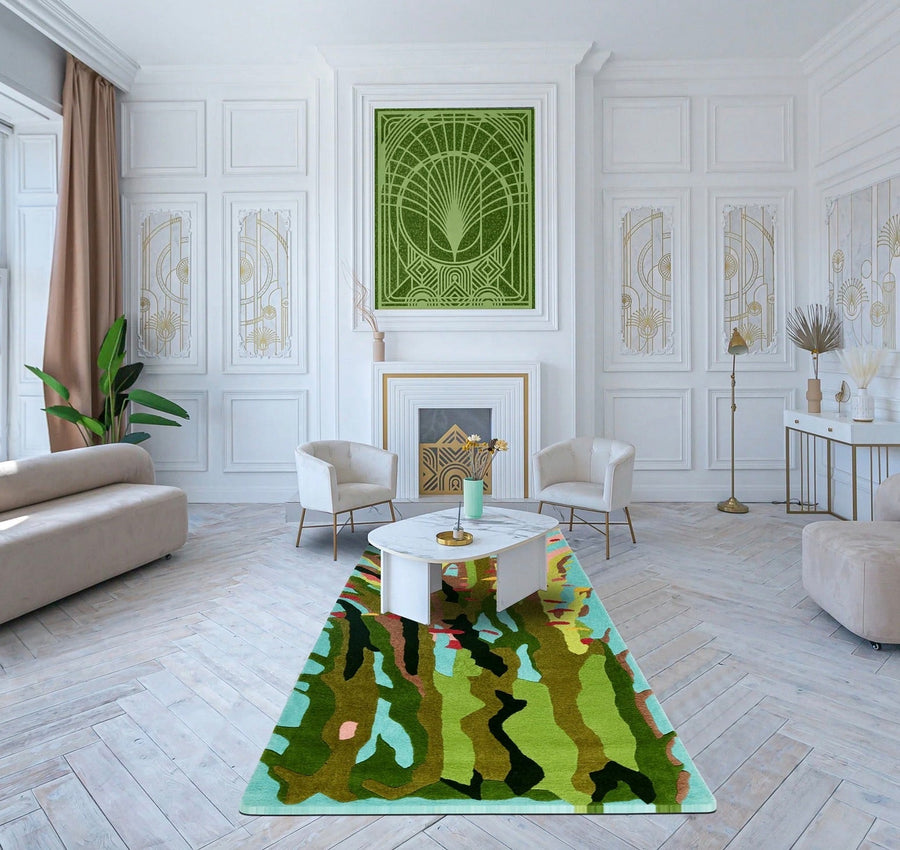
Have you ever finished furnishing a room and felt something was still missing? More often than not, that something is the rug. Designer rugs are not mere accessories: they are engineered surfaces that pull together the colors, materials and proportions of a space, turning a collection of furniture into a coherent interior.
The wrong rug, on the other hand, can dull even the most carefully curated living room. Too small, and the proportions collapse. Made from the wrong fiber, and it wears out within a few years. That's why this choice deserves the same attention you give a sofa or a chandelier.
On this page you'll find our collection of hand-knotted modern and contemporary rugs, together with a complete guide to help you choose: what sets a true designer piece apart, which precious fibers to pick (New Zealand wool, silk, viscose, Tencel), how to calculate the right size, and how a bespoke project works. Whether you're a private client searching for the perfect piece or an interior designer completing a contract project, you'll find concrete answers here.


A designer rug is a textile work born from a project: an original drawing, a carefully studied color palette and an artisanal weaving process that make it a one-of-a-kind piece, designed to converse with the architecture of the space that hosts it.
This is the substantial difference from a mass-produced rug. As you may well know, an industrial product replicates a pattern endlessly. A designer piece, by contrast, comes from a creative journey: a designer studies trends, chooses the geometries or organic motifs, defines the shades and entrusts the drawing to the hands of expert artisans.
The result is a furnishing element with a strong personality. Not an accessory, but a true protagonist of the room (on a par with a sculpture or a piece of art hanging on the wall). In fact, in the most successful interior design projects, the rug is selected at the beginning of the creative process, not at the end: it's often where the palette of the entire room begins.
Modern rugs interpret today's decorative sensibility through essential geometries, painterly abstractions and organic motifs inspired by nature. They are the contemporary evolution of an ancient textile tradition, the same one that gave life to the great collectible oriental rugs. And it's precisely in this encounter between past and present that their charm lies.
Our collection of modern rugs ranges from abstract compositions in intense colors to botanical designs of Scandinavian inspiration, all the way to textural tone-on-tone surfaces. Some pieces play with depth: the pile is sheared at different heights, creating perspective effects that shift with the light. Others are all about color, with shades moving from turquoise to emerald or from earthy tones to the most delicate powders.
Each style answers a different need in the room.
Little secret: a bold pattern needs visual breathing room around it. If the room is already rich in patterns (wallpaper, textiles, artworks), it's better to choose a tone-on-tone contemporary rug, which adds texture without competing with the rest.
In large open-plan spaces, the rug performs a precise architectural function: it defines functional zones without the need for walls. One rug under the conversation area, another framing the dining zone: the space gains order and immediate legibility.
At the same time, rugs noticeably improve indoor acoustics. They absorb sound, reduce echo and make rooms feel more intimate and comfortable. A concrete advantage especially in lofts, double-height spaces and rooms with hard surfaces such as stone, resin or wood.
Our artisanal rugs are born from an entirely manual process, the same one that has distinguished great collectible rugs from industrial production for centuries.
You may be wondering what "hand-knotted" actually means in practice. It means every single knot is tied by an artisan's fingers, one after another, following the project drawing. Here's how a hand-knotted rug comes to life:
To give you an idea of the complexity: one of our hand-knotted rugs requires, on average, the work of 3 to 4 artisans over roughly 12 weeks. Not bad, right? It's this density of human labor that makes each piece unrepeatable.
Alongside hand knotting, our collection of hand-knotted rugs is complemented by hand-tufted creations, a technique that allows faster lead times and great creative freedom in the designs, while maintaining a high artisanal standard. The difference? Hand knotting represents the highest level of refinement and durability; hand tufting is perfect for creative projects with tighter deadlines.
What truly sets luxury rugs apart is the raw material. The fiber determines the hand of the rug, its luminosity, its resistance to foot traffic and the way it ages over the years. That's why we select only yarns of the highest quality, often combined to achieve distinctive textural and chromatic effects.
Wool is the queen of textile fibers. Naturally stain-resistant, elastic and insulating, it produces rugs that last for generations. We primarily use handspun New Zealand wool, spun by hand to preserve its softness, and precious high-altitude wools for the most textural designs. Explore the dedicated collections: wool rugs and Himalayan wool rugs. From these high-altitude wools also come our Tibetan rugs, knotted according to the Himalayan manual tradition.
Lustrous fibers turn the surface of the rug into a play of reflections that changes with the light and the viewing angle. Silk delivers absolute depth and preciousness. Viscose and Tencel (a plant-based silk) offer the same luminosity with a more sustainable approach: you'll find both in our collection of viscose and Tencel rugs, often blended with wool to balance sheen and body. Alternatively, bamboo silk combines a silky hand with a natural fiber.
Please note: our production philosophy also embraces innovative yarns obtained from recycled textile waste. Luxury, today, also travels through environmental responsibility.
For the most refined projects we offer rare fibers, with an incredibly soft hand and a sophisticated look. Alpaca offers warmth and a unique velvety texture. Cashmere is synonymous with absolute softness. Mohair adds natural sheen and lightness. These are the fibers we choose for master bedrooms, hotel suites and spaces where tactile comfort is part of the design brief.
At this point, you know the techniques and the materials. The practical question remains: how do you choose the right rug for your space? Here are the rules we ourselves follow when working alongside designers and private clients.
The most common mistake is choosing a rug that's too small. An undersized rug visually shrinks the room and breaks the balance of the furnishings. These are the correct proportions:
For grand spaces, take a look at our selection of large rugs; for passageways, browse the runner rugs collection.
The rectangular shape is the most versatile and adapts to virtually any room. A round rug, on the other hand, converses beautifully with circular tables, curved furniture and compact rooms, creating an immediate focal point. Asymmetrical or sculpted shapes are bold design choices: perfect when the rug is meant to be the artistic gesture of the room.
The color of the rug doesn't necessarily have to echo the furniture. Quite the opposite: a well-calibrated contrast often creates more coherence than a perfect match. Clearly, it's always worth considering how the tones interact with the floor and the walls.
Deep tones (midnight blue, forest green) add elegance and visually anchor the furnishings. Light, neutral shades amplify the light and make the room feel larger. Intense hues, from turquoise to emerald all the way to powder pinks, bring energy and personality.
Let's recap the key points of this guide.
All that's left is to move from theory to practice. Explore the collection above and, if you have a specific project in mind, contact us: our team is available for tailored consultations, sampling and dedicated quotes. Which space are you ready to transform?
Here comes the part that truly sets us apart. Every one of our rugs can be made entirely to measure: size, shape, color palette, fiber and design are defined around your specific project.
The process is simple, and we guide you through every stage.
In essence, you're not picking a rug from a catalog: you're taking part in the creation of a one-of-a-kind piece, designed in Italy and crafted according to the most ancient hand-knotting traditions. Discover how the service works on our dedicated custom rugs page, or explore our complete approach to bespoke design.
Perhaps you work as an architect or interior designer and you're looking for a production partner, not just a supplier. That's exactly the role we play for the design studios we serve around the world.
For professionals, we offer complete support covering the entire process: fiber consultancy, design development starting from your project moodboard, dedicated sampling, production with certified lead times and assistance with special sizes or complex architectural shapes. We regularly work on prestigious residential projects, boutique hotels and contract and hospitality spaces, where high-traffic durability and coordination with construction schedules are essential.
If you manage projects in the hospitality world, you'll find all the details on our contract and hospitality page. If you're a design professional, discover our program for architects and interior designers: trade terms, a single point of contact and production priority.
In a hand-knotted rug, every knot is tied individually by the artisan on the loom: it's the most precious technique, with a lifespan that exceeds generations. In a hand-tufted rug, the yarn is inserted with a tufting gun onto a backing cloth: faster lead times, great creative freedom and excellent quality, at a more accessible level of investment.
A hand-knotted rug in quality wool, with proper care, lasts for several decades and is often passed down from generation to generation. Wool has a natural resistance to stains and wear; lustrous fibers such as silk and viscose require a little more attention and are ideal in low-traffic areas.
Yes, virtually all of our models can be customized in size, shape and color palette. We can also develop an entirely new design starting from your project: contact us for a dedicated consultation. For everything else (lead times, international shipping and returns) you'll find the answers on our frequently asked questions page.
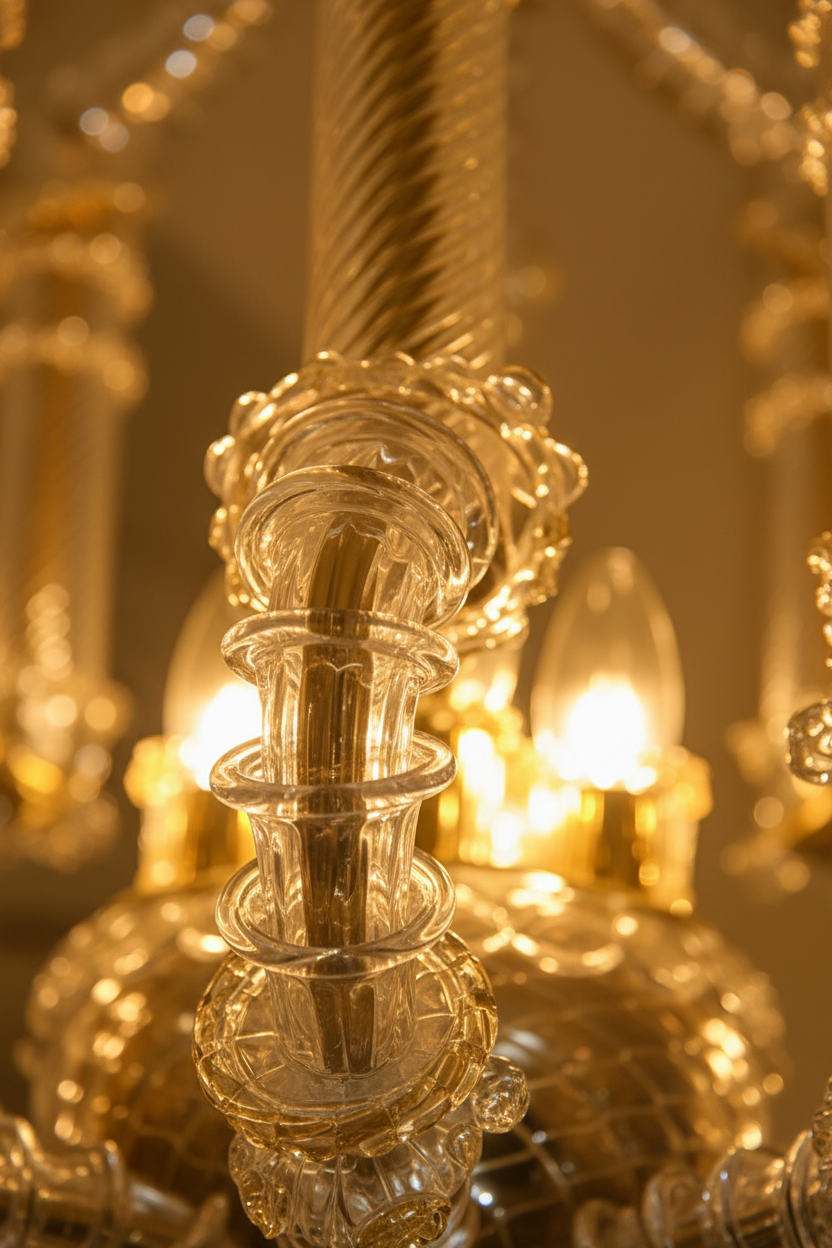
Bespoke design and custom decor: chandeliers, rugs, mirrors and wallpaper created for your project. From concept to finished piece, with Italian artisans.